Tuesday, March 1, 2011

Fish Spa


So novel I had to try—the Malaysians are really into these treatments, the spas are numerous.  Three Ringgits (less than 1 USD) buys your feet ten minutes in a pool with thousands of hungry ‘Doctor Fish’. Not advised for the ticklish or fish-phobic, the three inch toothless fish swarm your submerged appendages in a feeding frenzy, pecking off dead skin and apparently increasing circulation. Either I was in dire need of a cleaning or I taste particularly good because the fish gave my feet far more attention than the others in the pool. The sensation of looking down at your feet lost in teeming fish-boots as your bit by hundreds of tiny mouths does get heart going—I think this is the “increase in circulation” they claim. It was worth it for the good laugh and my feet did feel cleaner, but it is the type of experience that once leaves you fulfilled for a long time. 

The view from above--I had a serious school going

I wonder if different nationalities taste different? 


Even the hardcore Muslim women who only show their eyes in public will stick their toes out for these beloved fish. 

KL Night Market


Come nightfall the central arteries of Chinatown become impassable to all but foot traffic as a horde of transient buyers and sellers pack the streets, giving rise to a bazaar experience for all five senses. An indiscernible collective hum of bargaining and banter envelopes your hearing as you enter the crowd. This is no place for adherence to the Western notions of personal space—bumping, rubbing against and cutting off others are all acceptable moves for progress in the crowd, without them you’d be at a standstill. The humid heat persists even in the absents of the sun and has an intoxicating effect on those not used to it by sapping your energy, giving the world a surreal dreamlike texture…or maybe that was lack of water. The smell of roasting coffee and hazelnuts, fresh fruit and hawker food stalls dominate the air. Some food stalls cook with such spicy chilies that as you pass by the airborne oils cause the lungs to cease up and burn, but it’s quick to pass. And then, as if to makes these sweet smells sweeter, there is the occasional whiff of raw sewage or rotten garbage from behind the scenes—ah the joys of a developing nation. 


Once your appetite has returned Indian tandoori pots and vats of curries, huge Chinese noodle filled woks and Malay concoctions like peanuts and dried fish are present in abundance. Wash it down with a fruit smoothie, Chinese tea or Tiger brew. After taking care of the stomach one can enjoy the visual feast—illuminated by red paper lanterns and strands of blue lights merchant stalls display mostly knockoff garments, footwear, watches, sunglasses, handbags and wallets. This is no place for true hand crafts. Less than perfect replicas of the high-end products I saw for sale in Singapore were available in mass. After reflecting on my distaste for the multinational brand names selling their overpriced goods (see Chasing an Illusion) I had a new respect for the counterfeit scene of the night market. If companies like Louis Vuitton are going to engineer needs for their goods in the public at large but limit who can have their goods by the price they charge, I see no moral issue in knockoff artist providing for these perceived needs with similar goods at a much more accessible price. It’s Robin Hood justice of sorts.


When buying anything but food barter is the game played in these streets, and after reading some pointers I was keen to hone my skills with practice. All prospective transactions began in a similar way—entering a merchant’s stall you casually look over his goods uninterested in anything specific, or anything at all, allowing 
him to approach you—“Yes, for you sir!?!”

With a pause, nonchalantly ask him the price of a few items, never just the one you’re interested in, as if only to humor him for asking. No matter what his price your retort is as always the same—“too much!” with a look of shock.

Without fail this leads the merchant to spiel about his great product and why it’s worth the high price, which again is met with—“too much, too much.”

This might get him to lower his price, but usually only a little. “Is that your best price? I want your best price!” you demand firmly always with a smile, keeping things light but cutting to the chase.  He doesn’t want to undercut what you might be willing to pay so the question begets a question—“how much you want to pay?”

This answer has to be calculated, a bit lower than you’re actually willing to fork over, but not so low that he doesn’t take you seriously. Upon stating your lowball price it is his turn to bock and act repulsed, most merchants put on a good show, but the key is standing firm. He’ll counter with something higher, and depending on how much he gives from his original price gage how low you think you can get him and make a final offer. After making the final offer the move is to stick to it until he accepts…if he continues to fuss walk away. The threat of taking your business elsewhere is deal closing power move, the merchant almost always calls out and to accept your price before you’re out of his stall. But you can’t fake the walk away, if he doesn’t go for it just keep walking—he isn’t willing to take the offer and you’ve just given up too much bargaining leverage to negotiate further. No big deal all the merchants sell basically the same stuff, go to another stall, mend the tact and play again…it’s all just for fun. 


Kuala Lumpur—Refreshingly Unfamiliar


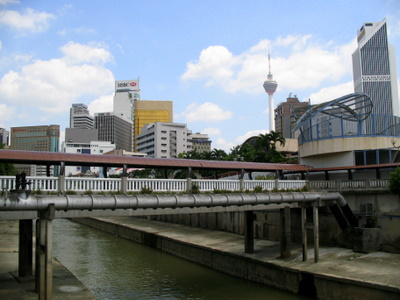
Though they’re less than an hour apart by plane, Kuala Lumpur and Singapore are totally different beasts. Kuala Lumpur (or KL as it’s known locally) is a pleasantly unpolished, there was something about its grimy, at times seedy and wholly foreign, rough cut that I found refreshing. Maybe I was just craving travel time in a developing nation after New Zealand and Singapore, the western amenities, common language and similarities in culture can become lackluster when you’re seeking fresh experiences. There is immense character in KL’s dirty streets, tattered buildings, strange smalls and an unfamiliar culture—you can’t avoid newness. And it’s this newness that keeps you in the present, unable to file these experiences into preformed boxes of perception from the past you can’t help but more fully engage them as they occur. To me this is what traveling is all about…

 Part of the one block Little India

I don't know what this woman was making, shavings of something and white paste wrapped in a banana leaf, by the way everyone around her was acting it had to be narcotic  

Dankness on a stick in the making 

Crowds like this is are unavoidable...get comfortable with it

The motor scooter: The family car of SE Asia

Saturday, February 12, 2011

Chasing an Illusion


By any metric the City-state of Singapore is a developed nation. With the exception of the tropical climate and the ethnic composition the city looks and feels a lot like the States. Crime is a minimal concern, the tap water is safe drink and the streets are clean—shopping is a favorite pastime. Much, no most, of the city’s downtown is retail space, temples devoted to the gods of consumption of a scale unlike anything I have ever seen. Eight story malls were common, four floors above ground and four floors below, interlinked by subterranean tunnels (lined by more stores obviously) and high-speed rail lines. Offerings ranged from cheap trinkets on the outskirts to luxury designer brands occupying center stage—the likes of Prada, Gucci, Dior, Burberry, Dolce & Gabbana—foreign brands aggressively staking claims in the psyches of the emerging Asian markets.These companies work hard (and spend a lot) to create perceived value in their goods based on brand recognition and its suggestion of status—at $350 a key fob they’re selling a desirable psychological association with their name more than a tangible good…and it’s working, well. When I passed Louis Vuitton there was a line out the door, devoted consumers willing to wait to throw serious cash at items like the hideous brown and gold handbags whose esthetic is centered on flaunting the company’s emblem—if you step back and contemplate this phenomena it is truly bizarre.


The whole scene was a bit much for me. The thought of how much energy that went into lighting and cooling the massive amount of retail space was mind boggling, let alone the embodied energy in the buildings and the goods that went out their doors. The relatively small island of Singapore, whose population is roughly equal to that of New Zealand, is a black hole for resources. I was aware it was happening, but seeing their success firsthand was disheartening—the same companies that have been so effective at engineering an insatiable hunger for consumption in America are now setting their sights on Asia, using the West as a role model. The fact that 80 percent of the faces that seductively stare out at potential customers from storefront ads are Caucasian is very telling—chasing the ‘American Dream’ seems to be a sadly relevant term in this context too. And it goes far beyond clothing and accessories, McDonalds, Starbucks, KFC, 7-Eleven,and other hawkers of cheap convenience fly their familiar flags on almost every block--it's a whole lifestyle being sold. Towering high above the frantic bustle skyscrapers house the true string-pulling puppeteers, the bankers. In one of the biggest port cities in the world all the big multinational financiers are present, no doubt spreading the same delusional debt based model of growth that now has the Western world, from the individual to the institution, in a chokehold.

While I felt there was value in experiencing it, this was all a little too reminiscent of the atmosphere I was striving to step out of by traveling—I was excited to get into Malaysia. 


Goods on the move--ships as far as you can see lined up in the harbor

The view from our hotel--check out the Dubai-esk hotel on the left, 80 floors of rooms and then a pool deck up top with palm trees and sand. Crazy. 

Kicking off Lunar New Year

MMM...Food

A bit jetlagged, our first day in the new city started sluggishly. After a month of traveling apart I met up with my parents in Auckland and we flew to Singapore, where we planned to spend a few days together before charting different paths north through Malaysia. I always enjoy their fun-loving company, and the upscale accommodations and meals they grace me with are a treat after living on my backpacker’s budget. 


It was the lunch hour by the time we were descending in the hotel elevator. The concierge recommended food stalls across the street where we strolled with haste, excited to sample the renowned cuisine of the region. Headed for the top of a five story shopping complex we made our way through a maze of cubic shops displaying everything from tailored silk suits to cheap electronics. Merchants were respectful as we passed, exchanging smiles they didn’t hound us for a sale. English is the official language of Singapore but it is not the first language of most of its residents. If you’re eating where the locals do English descriptions on menus are limited, as is most merchants working grasp of the language, luckily pictures are common. Point at something that looks good and hope for the best. What comes out is always a gamble but the surprise is part of the fun, it usually turns out well. The port city has long been a hub of international trade, its citizens and thus its cuisine reflect this international influence—Chinese, Malay, Indian and Thai are the staples but Indonesian, Korean, Japanese and Vietnamese are common, ranging from glitz to gritty. After the relatively bland fare of New Zealand, my taste buds thoroughly enjoyed the complex flavors concocted from the region’s sundry of spices, which of course finished with a beloved eye-watering burn of hot peppers. And for desert…coconut rice cakes, Chinese egg custards, fresh fruit smoothies. Yeah I think I can handle a few months of this...  

Here We Go...

I've rarely had access to TV news while traveling, but each time I catch it dramatic weather events are making headlines. An unusually cold and snowy start to the winter in Western Europe, record breaking summer rain in New Zealand, catastrophic flooding continues in Australia and most recently an extraordinarily harsh storm breaks records in the Midwest of the US. Coincidence of random events or is there a pattern emerging? I would strongly suggest the latter.

Two of the largest and well respected scientific bodies, the American Association for the Advancement of Science and the National Academy of Science, have made strong statements that Climate Change (CC) is measurably occurring and that it is human caused. The science is solid and relatively straightforward, increased atmospheric concentrations of heat-trapping carbon dioxide (which can be traced to fossil fuels by isotopic composition) and methane means less of the energy the earth receives from the sun is radiated back out into space. What is far less straightforward, and really is anyone’s guess in a system as large and complex as the global climate, is the affects this increased systemic energy will have on the climate of specific locales—but as we’re beginning to witness change appears inevitable. On a macro-scale more energy in the system will likely amplify the intensity and frequency of extreme weather events on both ends of the spectrum, resulting in wetter, colder storms and hotter, dryer droughts. Global Weirding or Climate Collapse might be more appropriate terms as it seems likely that future climates will be anything but the stable norm we’ve enjoyed for all of commonly understood human history.

Since we’re basing the appraisal of this threat on scientific understanding there will always be a margin of error (however small) to support skepticism—that is the nature of science, it is never certain and never will be. Even more generally if we are being rational we can admit our own perceptual limitations as humans and thus the ever-present potential for if being wrong. So this ‘lack of certainty’ argument that’s being used to thwart risk averting action is erroneous.

Action or no action…it’s a gamble either way, but let’s be clear about what’s on the line. Wager an economic cost or a stable climate?  

Eye Candy

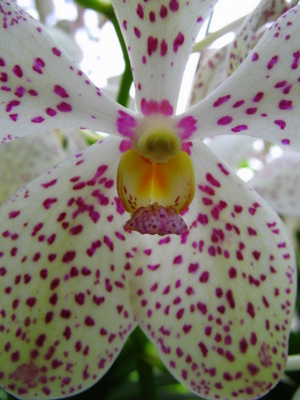
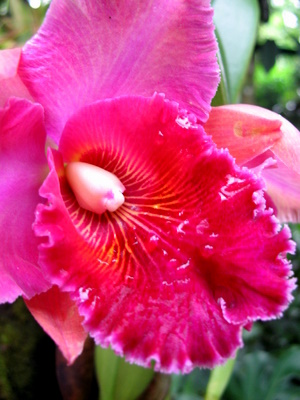
Singapore Orchid Park